
How Maryland Inmate Records Work
Maryland does not publish one complete statewide jail roster. DPSCS publishes a state inmate locator for covered state custody. Counties and Baltimore City handle local jail or detention records through local rosters, jail pages, VINE, phone inquiry, and public-records requests. Some localities publish searchable current rosters or booking feeds. Others do not publish a full public roster and instead route users to VINE, court search, or the records custodian. That variation is a key Maryland fact, not a gap to smooth over.
The first question is whether the person is a new arrestee, a pretrial detainee, a short local sentence, a sentenced state prisoner, a federal prisoner, an immigration detainee, or a person whose only public record is a court case. The same name can appear in more than one system at different times. A jail booking can precede the prosecutor's final filed charge. A court case can remain public after release. A DPSCS record can identify a housing location but not show the whole case file.
Maryland local custody also varies by operator. Anne Arundel, Montgomery, Prince George's, Baltimore County, Howard, Wicomico, and other localities use county corrections or detention departments, while many smaller counties use sheriff-operated detention centers. Baltimore City is different because DPSCS operates major pretrial and detention facilities there. Those differences affect where the inmate record is published, who answers a records request, and whether the public sees a searchable roster, a limited custody page, a VINE route, or no online roster at all.
The DPSCS Incarcerated Individual Locator is Maryland's state-custody name search.
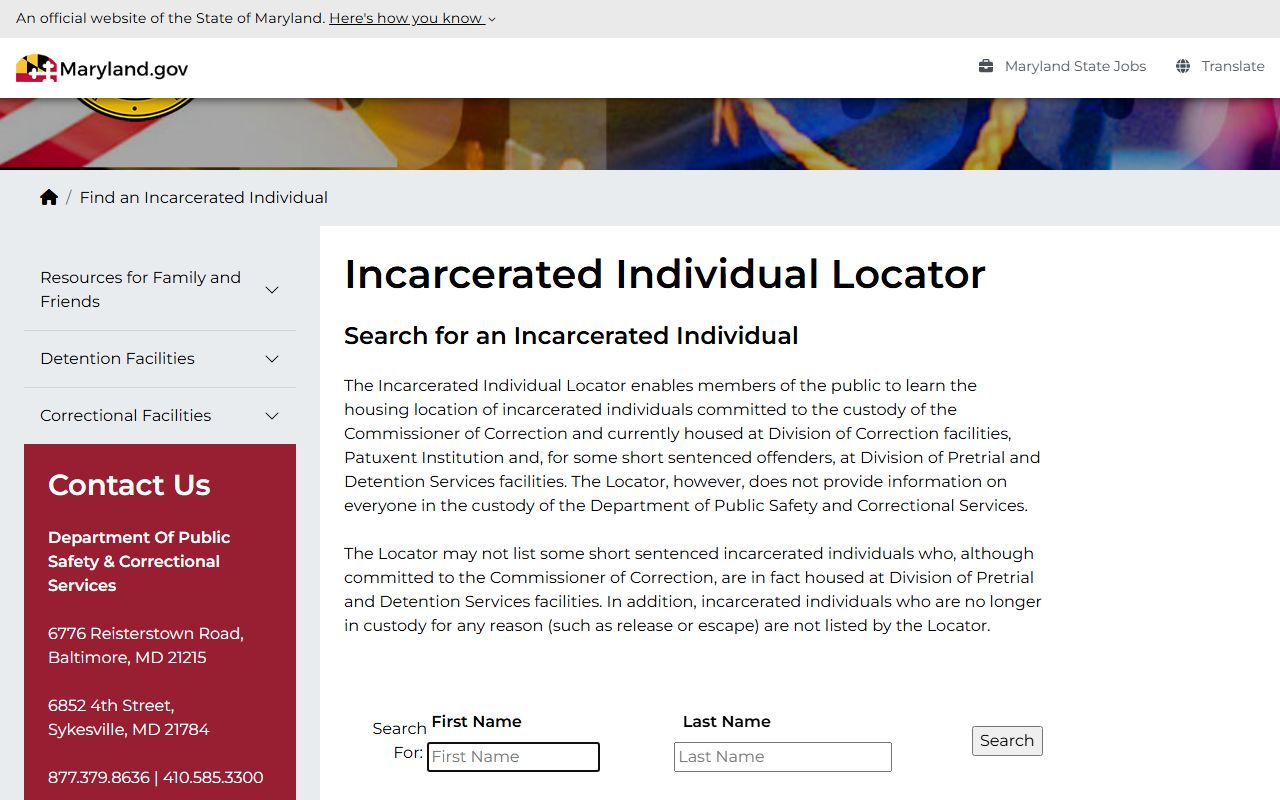
The locator is a core Maryland inmate records tool, but the research makes clear that it is not a statewide county jail roster.
Find Maryland Inmate Records
A practical Maryland search follows the custody path instead of starting with every database at once. A county arrest points to the county that booked or holds the person. A state sentence points to DPSCS. A federal sentence or federal pretrial hold points to BOP or the U.S. Marshals context, with facility records such as FCI Cumberland or Chesapeake Detention Facility where applicable. An immigration hold points to ICE ODLS. Court charges after arrest point to Maryland Judiciary Case Search.
- Use the last known arresting or holding county when the person was recently booked.
- Open that locality through the Maryland county directory and follow the local roster, VINE, phone, or records path.
- Use the DPSCS locator when the person may be committed to the Commissioner of Correction or housed in covered state custody.
- Use BOP for federal custody and ICE ODLS for immigration custody.
- Use Case Search for charge, court date, disposition, and clerk routing after arrest.
Maryland Custody Systems
Each Maryland inmate records source answers a narrow question. DPSCS answers a state housing-location question for covered custody. County rosters answer local custody questions where the county publishes them. VINE provides notification and status where participating agencies and cases are integrated. BOP answers federal custody questions nationally. ICE ODLS answers immigration detention questions by A-number or biographical data. Case Search answers court case questions, not current jail location.
| Custody or record | Run by | Where to look |
|---|---|---|
| Recent arrest or pretrial detention | County jail, county corrections, sheriff, or Baltimore DPSCS detention | County roster, VINE, local records route, and Case Search |
| Sentenced state custody | Maryland DPSCS | DPSCS Incarcerated Individual Locator |
| Federal custody | Federal Bureau of Prisons or federal detention authorities | BOP inmate locator and federal district context |
| Immigration detention | ICE | ICE Online Detainee Locator System |
| Court case after arrest | Maryland Judiciary | Case Search and clerk records |
The BOP inmate locator covers federal prisoners, including Maryland-linked federal custody records.
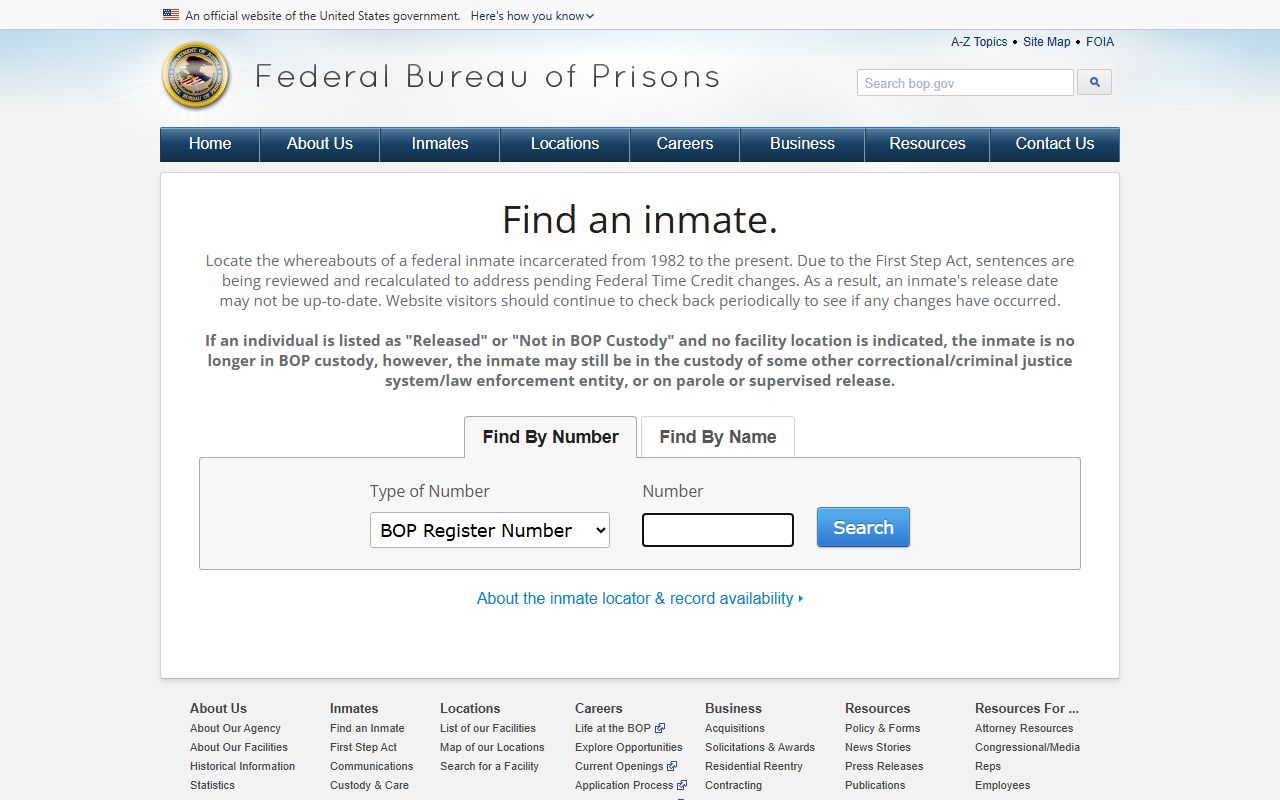
Federal results should not be confused with DPSCS or county jail records because they are maintained under a separate federal system.
Maryland Inmate Record Fields
Maryland roster and locator fields vary by source. The DPSCS locator is name based and should be described as a housing-location locator for a defined subset of current custody. County rosters can include booking number, charge, bond, booking date, facility, housing unit, release status, or booking photo, but the exact fields differ. Case Search can show party names, city or state, case number, date of birth, trial date, charge, and disposition when those fields are public.
| Field | What it usually means |
|---|---|
| Name | The searched or displayed legal name, with possible spelling and alias issues. |
| Booking or admission date | The local jail booking date or state custody entry point, depending on source. |
| Facility | The jail, prison, detention center, or state housing location. |
| Charges | Booking or court charge labels, which may change after prosecutor review. |
| Bond or custody status | Release condition, hold, sentence, or current custody note where published. |
| Photo | A booking image where a county or agency publishes it, subject to records limits. |
Maryland VINE Notifications
Maryland VINE and VINELink are important because many county pages point users there when no full roster is published. VINE can provide custody-status and criminal-case notification where the agency and case type are integrated. The Governor's Office of Crime Prevention and Policy also provides VINE phone and TTY guidance and cautions that VINE should not be the only safety-planning tool. That warning belongs in inmate-records copy because notification and live custody verification are not the same thing.
Maryland VINELink is the statewide VINE portal for custody and case notification.
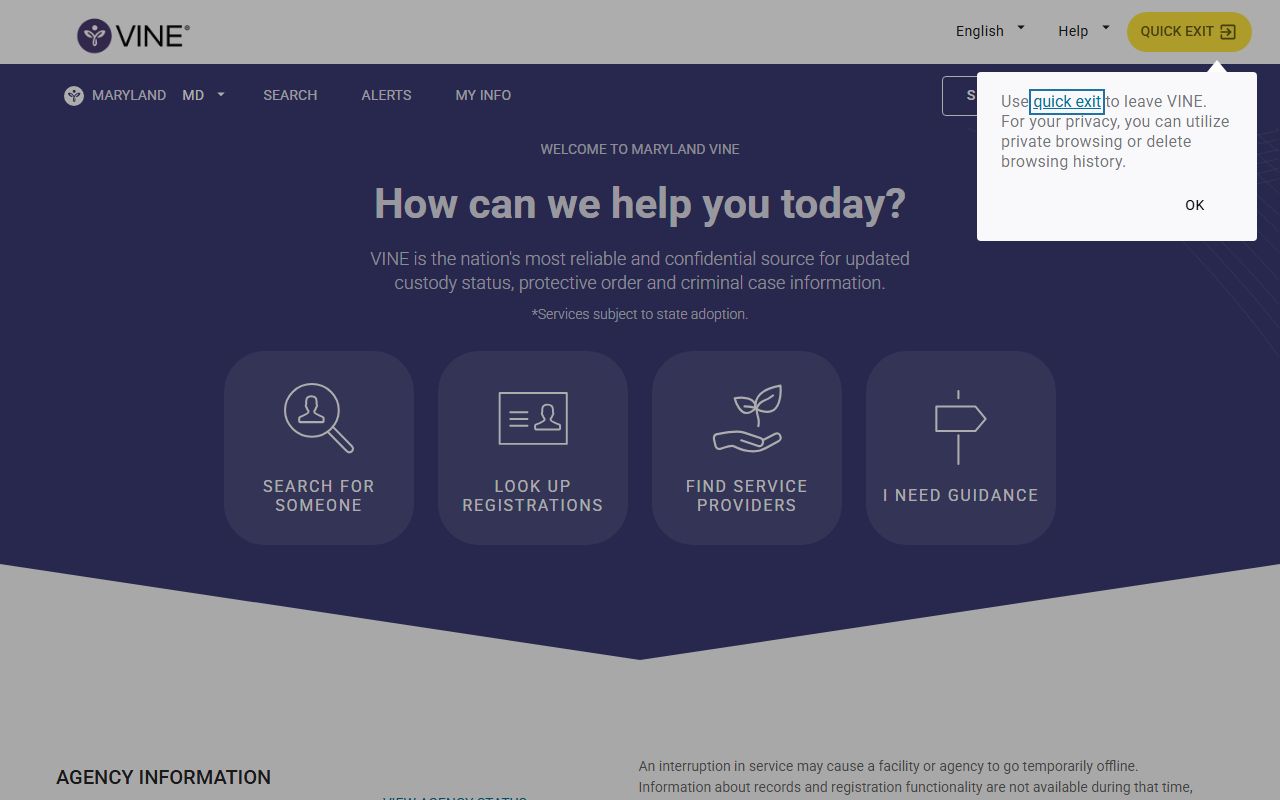
VINE is often the fallback when a Maryland county does not publish a full current inmate roster online.
Maryland Inmate Records Requests
Maryland's Public Information Act applies statewide, but the request must go to the custodian that holds the record. DPSCS records go to DPSCS. County jail records go to the county detention center, sheriff, or county corrections department. Court records go through the Maryland Judiciary or clerk. Police reports go to the police or sheriff agency. Prosecutor files go to the State's Attorney where law allows access. Sending a jail request to DPSCS can fail because DPSCS does not manage other agencies' records.
DPSCS identifies its Public Information Act Coordinator Office of Constituent Services at 6776 Reisterstown Road, Suite 212, Baltimore, MD 21215, and lists dpscs.pia@maryland.gov for PIA requests. The agency page also explains exemptions for privileged records, medical records, personnel records, financial information, investigatory records, internal memoranda, and some incarcerated individual case records. MPIA covers existing records, not a demand that an agency create a new list.
The DPSCS records request page explains state correctional records routing and limits.
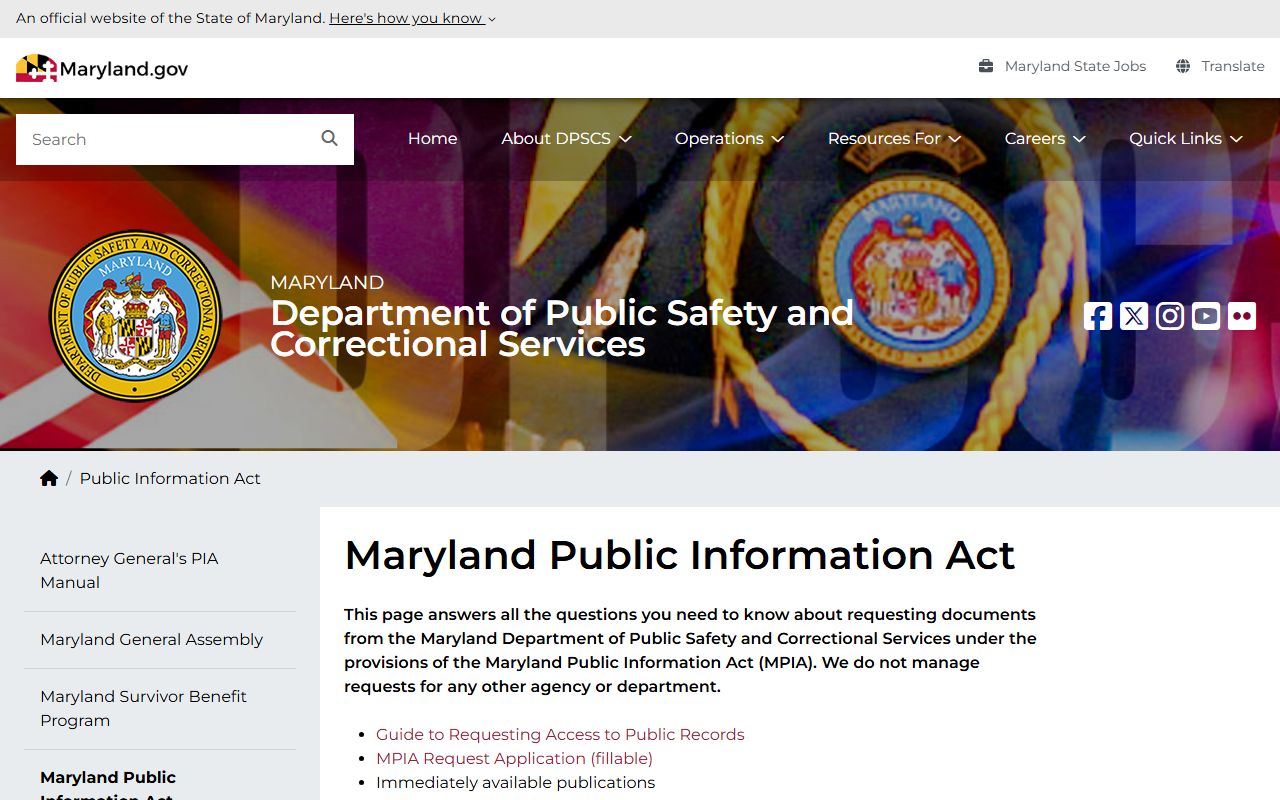
The page is useful for DPSCS-held records, while county jail and court records still need their own custodians.
Maryland Detention Facilities
Inmate records also depend on the facility. Maryland's statewide directory includes adult county detention centers, work-release or community corrections programs, state prisons, DPSCS detention facilities, secure juvenile facilities, and FCI Cumberland. The directory keeps special rows distinct, including Chesapeake Detention Facility for federal detention, Baltimore Central Booking and Intake Center for state-operated Baltimore intake, and Mid Shore Regional Detention Center as a planned regional facility from the local research.
For state prisons, use the statewide DPSCS locator and the DPSCS records process. For county jails, use the county subdomain and the local roster or request method documented there. For work-release and community corrections entries, expect program-specific custody rules rather than a standard jail booking list. For juvenile secure facilities, public access is more restricted than adult jail records. That facility-type distinction keeps Maryland inmate records from being described as one uniform database.
Maryland Court Records Link
Court records are the companion source after a jail arrest. Maryland Courts explains that Case Search is a public way to search court case records, while complete files may require the clerk where the case is pending. The court record can show a filed charge, case number, trial date, disposition, and party details. It does not prove current jail custody.
Maryland Courts' court-records page explains Case Search and clerk access.
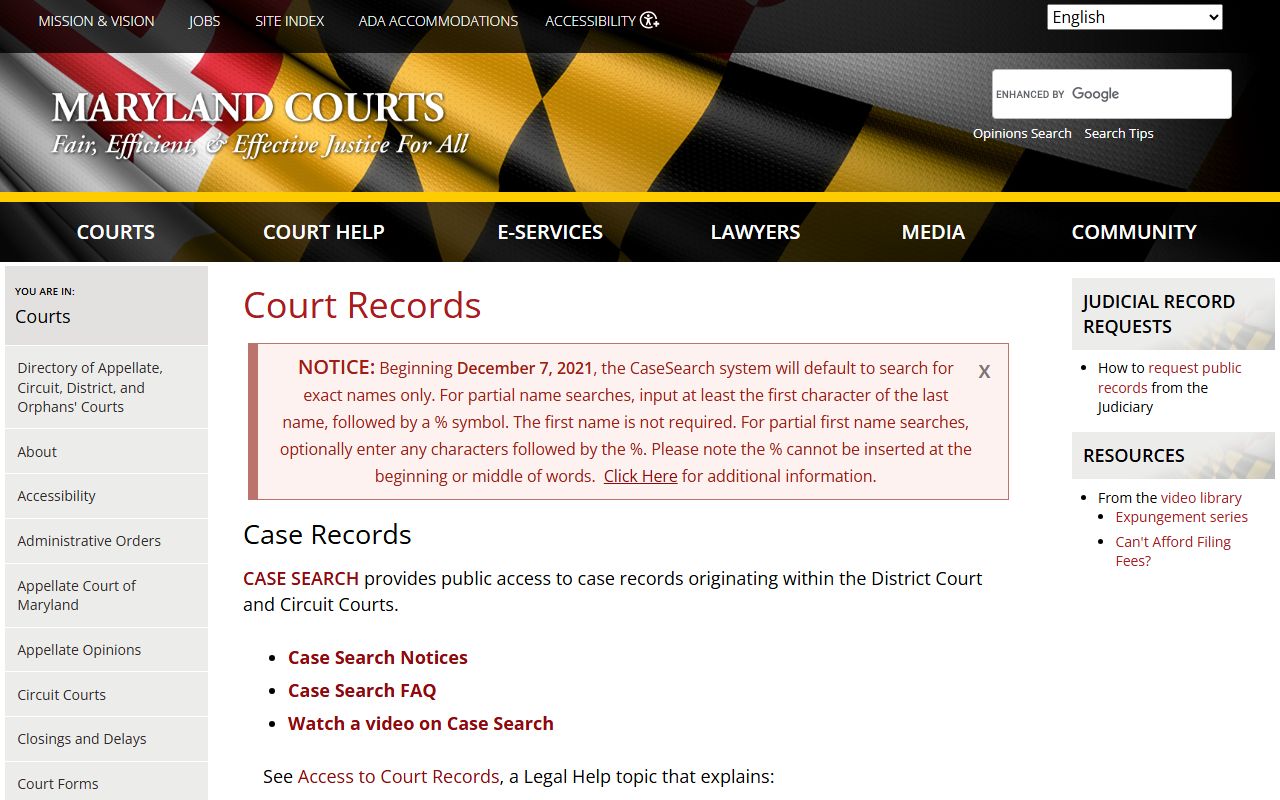
This court source should be paired with inmate records when a booking charge and a filed court charge do not match.
Public Record Search
Sponsored Results