
Maryland Court Records After Arrest
After a jail arrest in Maryland, the booking record and the court record serve different purposes. The jail side can show that a person was booked, housed, released, held on bond, or transferred. The court side shows the formal criminal case. Maryland Courts explains that Case Search is a public way to search court records, but complete court files may require the clerk where the case is pending. Some records are sealed, expunged, shielded, juvenile-restricted, or removed from online display.
That difference matters because booking charges can be preliminary. A prosecutor can file a different charge, amend it, dismiss it, or proceed by information or indictment. A jail roster may show a charge label before court review. A court case can stay visible after a person leaves jail. Use Maryland inmate records for custody status and use Case Search for the public court case after arrest.
Maryland Courts' court-records page explains Case Search, clerk file access, and public-record limits.
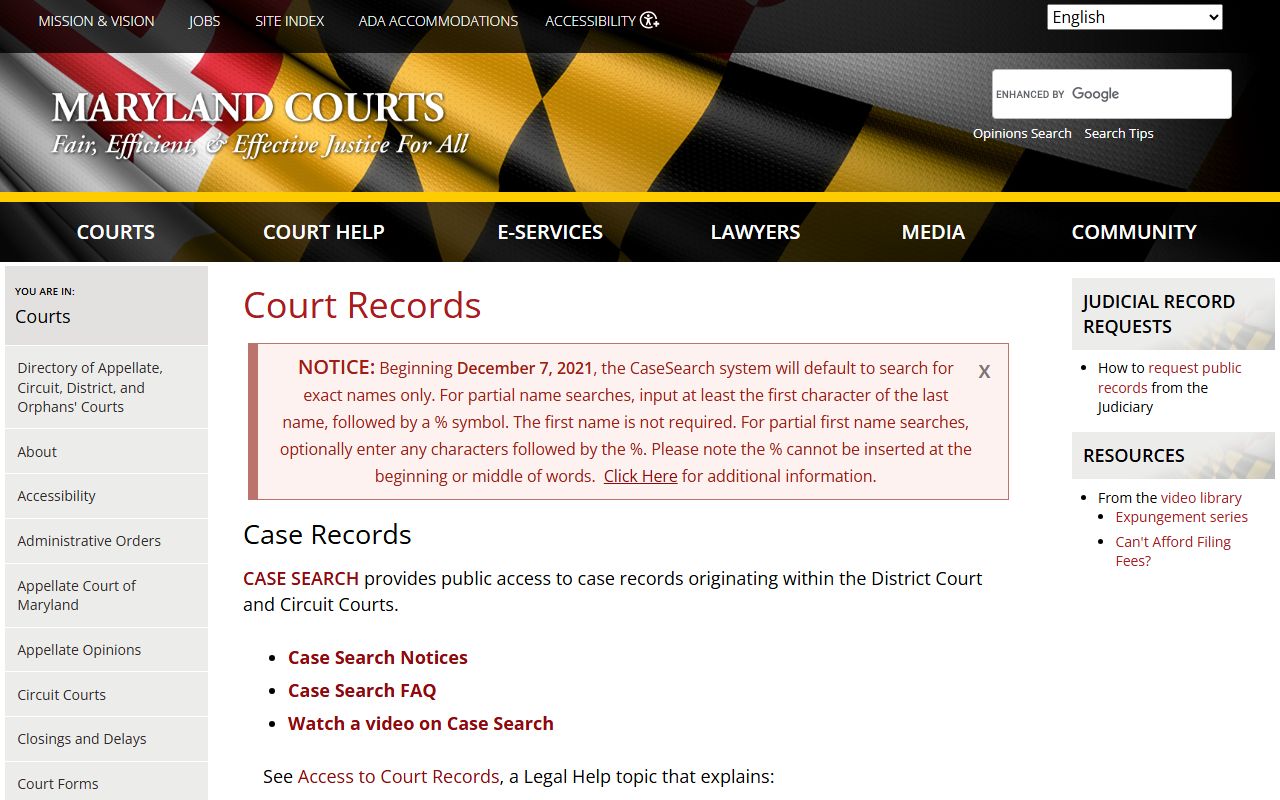
The court-records source is the right statewide anchor for charges and dispositions, not current jail housing.
Arrest to Maryland Court Record
The normal path is arrest, booking, commissioner or first-appearance review, prosecutor charging decision, and then a public case record if the case is not restricted. The court file is tied to the county or Baltimore City court where the case is filed. Maryland Judiciary Case Search can show public case summaries, but the clerk controls the full court file. The jail may still be the source for booking time, housing, bond status, or a current inmate profile.
- Confirm the arresting or booking county if custody status is still the key question.
- Open Maryland Judiciary Case Search or the court-records guidance page.
- Search by exact name, case number, or available public identifiers, using the wildcard guidance where appropriate.
- Open the case summary and compare charge, hearing, disposition, and party fields.
- Contact the clerk for records that are public but not fully shown online.
Maryland Case Search Fields
Maryland research identifies Case Search as the statewide court-record portal. The Case Search FAQ describes public fields such as party names, city and state, case number, date of birth, trial date, charge, and disposition. The notice page explains exact-name searching and percent-sign wildcard use. Those search rules are important when a person has a common name, a hyphenated surname, initials, or a spelling variation.
| Field | What it helps confirm |
|---|---|
| Party name | The defendant or party tied to the public court case. |
| Case number | The court's unique case identifier for clerk follow-up. |
| Trial or hearing date | Upcoming or past court events, when public. |
| Charge | The prosecutor-filed or court-tracked charge, not just a booking label. |
| Disposition | The public outcome where the case has reached one. |
Maryland Judiciary Case Search is the statewide case portal identified in the research.
When the live Case Search capture was unavailable, the Maryland Courts access page still documents the same court-record channel.
Charging Documents After Arrest
A court record after a jail arrest begins with a charging document or case filing. The research frames the pathway as booking first, then prosecutor and court action. A complaint, information, or indictment can move the case into the public court system. The name of the first filed document and the charge level can matter when a booking charge does not match the court charge later shown in Case Search.
| Document | Common role | How it affects the record |
|---|---|---|
| Complaint | Initial criminal accusation | Can start the public case after an arrest. |
| Information | Prosecutor-filed charge document | Can replace or refine earlier booking charges. |
| Indictment | Grand-jury charging document | Often used for more serious felony charges. |
Maryland Charge Status
Charge status can change after arrest. A pending charge is not a conviction. A prosecutor may amend a charge, reduce it, enter a nolle prosequi, or dismiss it. A court may enter a verdict or disposition after trial or plea. The public court record can show these changes more accurately than a jail roster because the jail roster is mainly a custody record.
| Status | Plain meaning |
|---|---|
| Pending | The charge is open and has not reached final public disposition. |
| Amended or reduced | The filed charge changed after review, plea, or court action. |
| Dismissed | The charge was ended by court action or prosecution decision. |
| Nolle prosequi | The prosecutor declined to proceed on that charge. |
| Conviction | A guilty plea, verdict, or other disposition created a conviction record. |
Bond Records After Arrest
Bond and release information often begins before a full court record is easy to read. A District Court commissioner or court can decide release conditions, bail or bond, and whether the person remains held. A jail roster may show current bond or hold status. A court record can show later hearings, orders, and case events. A detainer from another jurisdiction, federal authority, or immigration authority can affect release even when a local bond appears in the case.
- Cash bond
- Money posted to secure release, subject to court rules and case outcome.
- Surety bond
- A bond posted through a bondsman or surety process where allowed.
- Personal recognizance
- Release based on a promise to appear, sometimes called PR release.
- No-bond hold
- A custody status that prevents release unless the court or holding authority changes it.
Charges vs Convictions
Maryland court records after arrest must be read with a charge versus conviction distinction. An arrest and charge are accusations and process events. A conviction is a court outcome. The public may see both at different stages, but they do not mean the same thing. This distinction also matters for employment, housing, credit, insurance, and tenant decisions because those are FCRA-covered uses that cannot rely on a general public-records page.
| Charge | Conviction | |
|---|---|---|
| Stage | Filed accusation after arrest | Court outcome by plea, verdict, or finding |
| Record source | Case Search and clerk records | Case Search, clerk records, and criminal-history channels where allowed |
| Meaning | Not proof of guilt | Formal case result |
Sealed and Expunged Records
Maryland court records after arrest may become unavailable online because of expungement, shielding, sealing, juvenile confidentiality, or another restriction. Criminal Procedure section 10-103.1 addresses expungement after release without charge, including photographs and fingerprints. Section 10-105 addresses expungement of eligible police and court records. Maryland Courts also cautions that some records are sealed, expunged, shielded, juvenile-restricted, or removed from online access.
| Restricted online | Expunged | |
|---|---|---|
| Public display | Hidden or limited by rule, order, or policy | Removed or treated under expungement law |
| Records affected | Can include court, juvenile, or sensitive records | Can include eligible police and court records |
| Reader action | Contact the clerk or legal counsel for case-specific access | Use the Maryland expungement process where eligible |
Court Records and Custody
A public court case does not prove that a person is currently in jail. It shows the court side of an arrest. For current custody, use the county jail record, VINE, DPSCS locator, BOP locator, or ICE ODLS as the custody type requires. For booking photos, use the Maryland jail mugshots page and the local county record path rather than treating Case Search as a photo database.
The DPSCS Incarcerated Individual Locator should be checked when the court record suggests a state sentence or covered state custody.
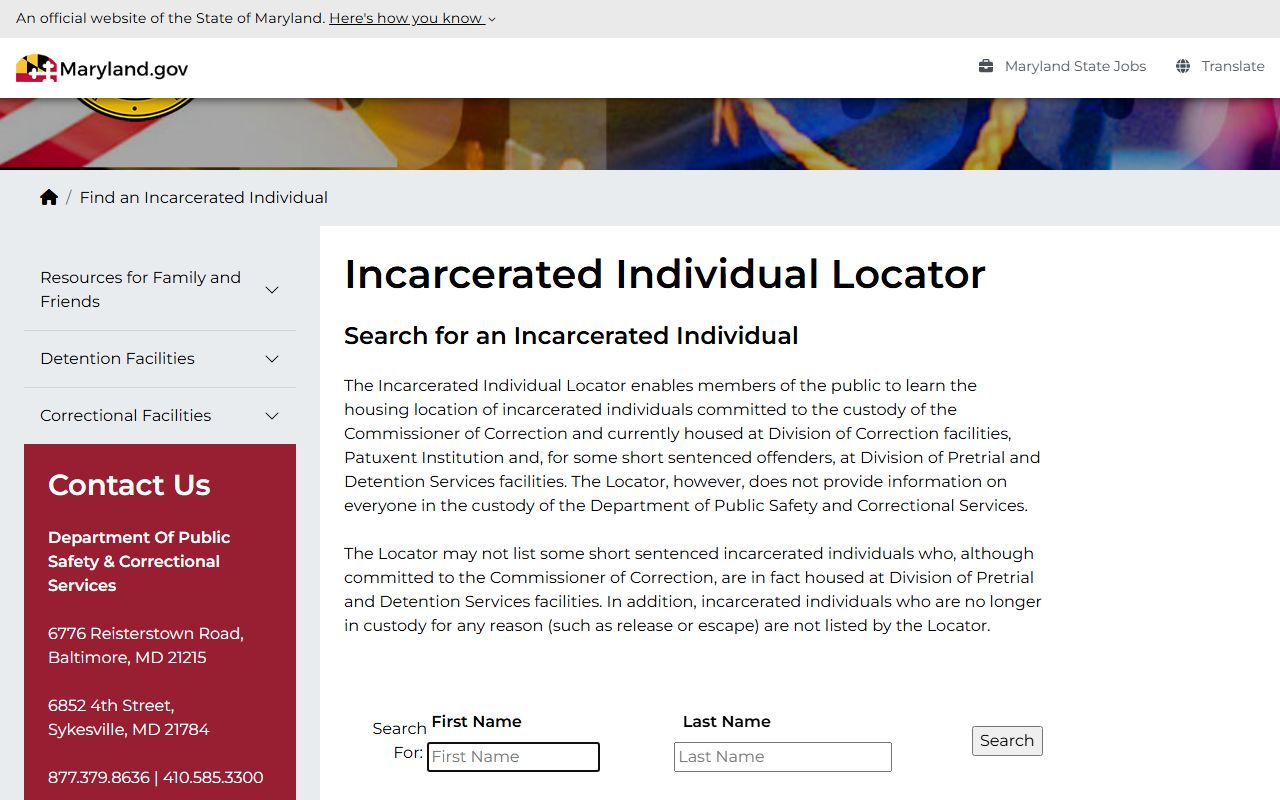
The state locator can confirm a covered DPSCS housing location, while the court record remains the source for public case events.
Maryland VINELink can support custody and case notification where the agency and case are integrated.

VINE should be treated as a notification channel that complements the court record, not as the full criminal case file.
Restricted Court Records After Arrest
Public access has real limits. Juvenile records, medical facts, sealed filings, expunged records, protected addresses, some victim information, and some investigatory records may not appear online. Maryland's Public Information Act also includes mandatory and discretionary denial rules, including General Provisions sections 4-301 and 4-351. Those rules can matter when a user tries to request police or correctional investigatory material connected to an arrest.
Important: This site is not a consumer reporting agency, and court-record information may not be used for any FCRA-covered decision.
Public Record Search
Sponsored Results