
The Maryland Inmate Population
The Maryland inmate population is not one list. The state prison population is reported by the Maryland Department of Public Safety and Correctional Services, known as DPSCS. County jail populations are run through local detention centers, sheriff offices, county correction departments, or, in Baltimore City, major state-operated detention facilities. Federal prisoners use the Bureau of Prisons system. Immigration detention uses ICE ODLS. Criminal court records use Maryland Judiciary Case Search. A statewide search becomes accurate only after those layers are separated.
Maryland's statewide research also shows why an apex page is needed above the county sites. The same person can move from local arrest, to booking, to first appearance, to county jail, to a court case, and then to a DPSCS prison after sentencing. A county jail roster can show custody before the court charge is final. A court case can remain online after release. The DPSCS locator can show a state housing location but does not list every person in DPSCS custody. VINE can help with notification, but it is not a stand-alone safety plan.
The DPSCS homepage confirms the statewide agency name, abbreviation, and public-service role.
This statewide agency page is the starting point for the state-prison side of Maryland inmate population research, while local jail details stay county by county.
Maryland Inmate Population Statistics
DPSCS reported a FY 2025 average daily incarcerated-individual population of 15,686. That is the cleanest current state-prison figure in the research. It is not a live headcount. The Department of Legislative Services reported in February 2026 that the sentenced population was about 19 percent lower in FY 2025 than in FY 2016, rose about 1 percent from FY 2024 to FY 2025, and then showed a 5 percent decline in the second quarter of FY 2026 compared with FY 2025.
| Measure | Figure | Source |
|---|---|---|
| DPSCS state-prison average daily population | 15,686 | Official DPSCS FY 2025 ADP report |
| Long-term trend | About 19% lower from FY 2016 to FY 2025 | February 2026 DLS FY 2027 budget overview |
| Recent annual movement | About 1% increase from FY 2024 to FY 2025 | DLS FY 2027 budget overview |
| Locality directory coverage | 23 counties plus Baltimore City | Maryland locality folder roll-up |
The DPSCS ADP report index is the official source for annual Maryland prison population reports.
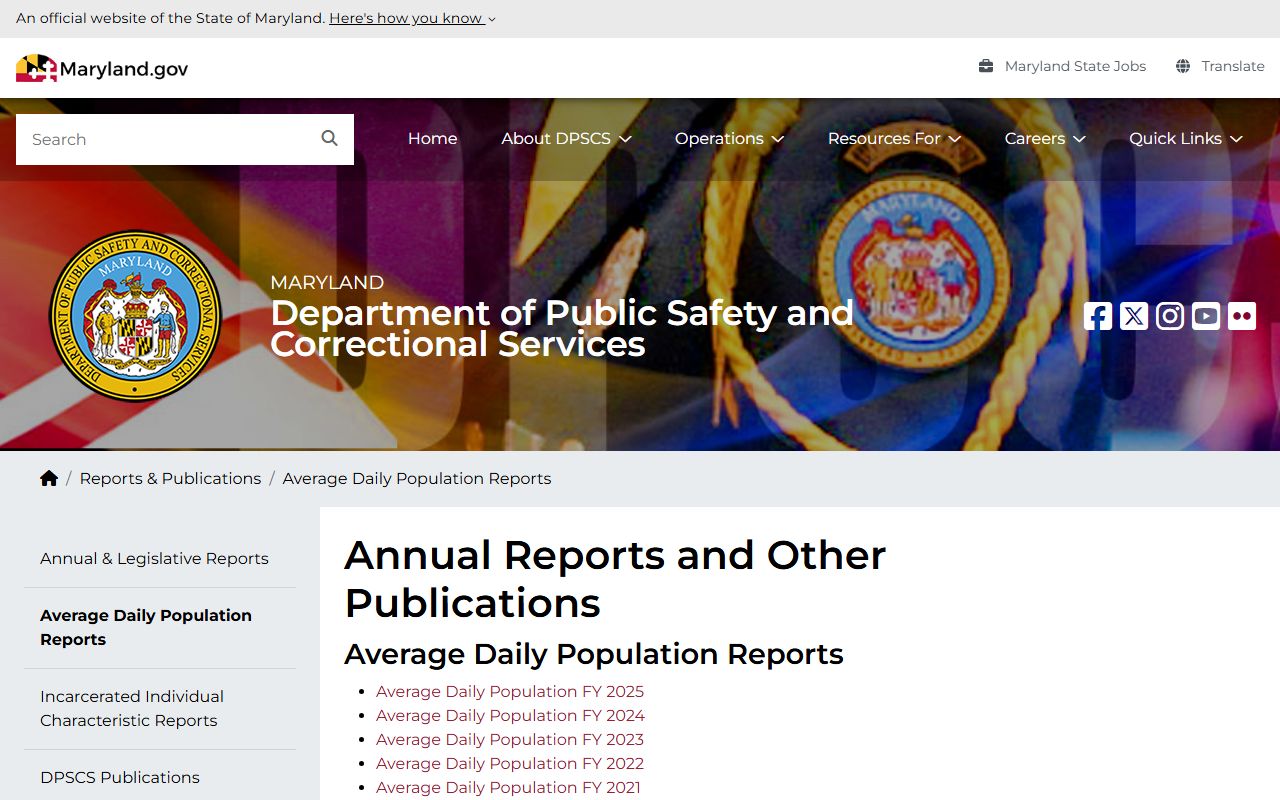
The report index helps distinguish a dated prison-population metric from a same-day inmate locator search.
Maryland Jails and Prisons
Most Maryland counties operate local detention centers for pretrial custody and short local sentences. Some are sheriff-operated. Others are county corrections departments. Baltimore City is the major exception because several pretrial and detention facilities are operated by DPSCS. State prisons and pre-release centers are DPSCS operations. The state's facility locator lists five detention facilities and 13 correctional facilities, while the Division of Correction overview describes 18 prisons and pre-release centers in operational terms.
Facility type matters. County jails are the better source for a recent arrest. State prisons are the better source after a person is committed to the Commissioner of Correction. Chesapeake Detention Facility is a state-operated facility used for federal detention. FCI Cumberland is a federal BOP institution in Allegany County. Youth detention facilities and juvenile records have more restricted public access than adult jail and prison records. Work-release and community corrections entries belong in the facility roll-up when county research treated them as separate custody operations.
The DPSCS facility locator lists Maryland detention and correctional facilities by state category.
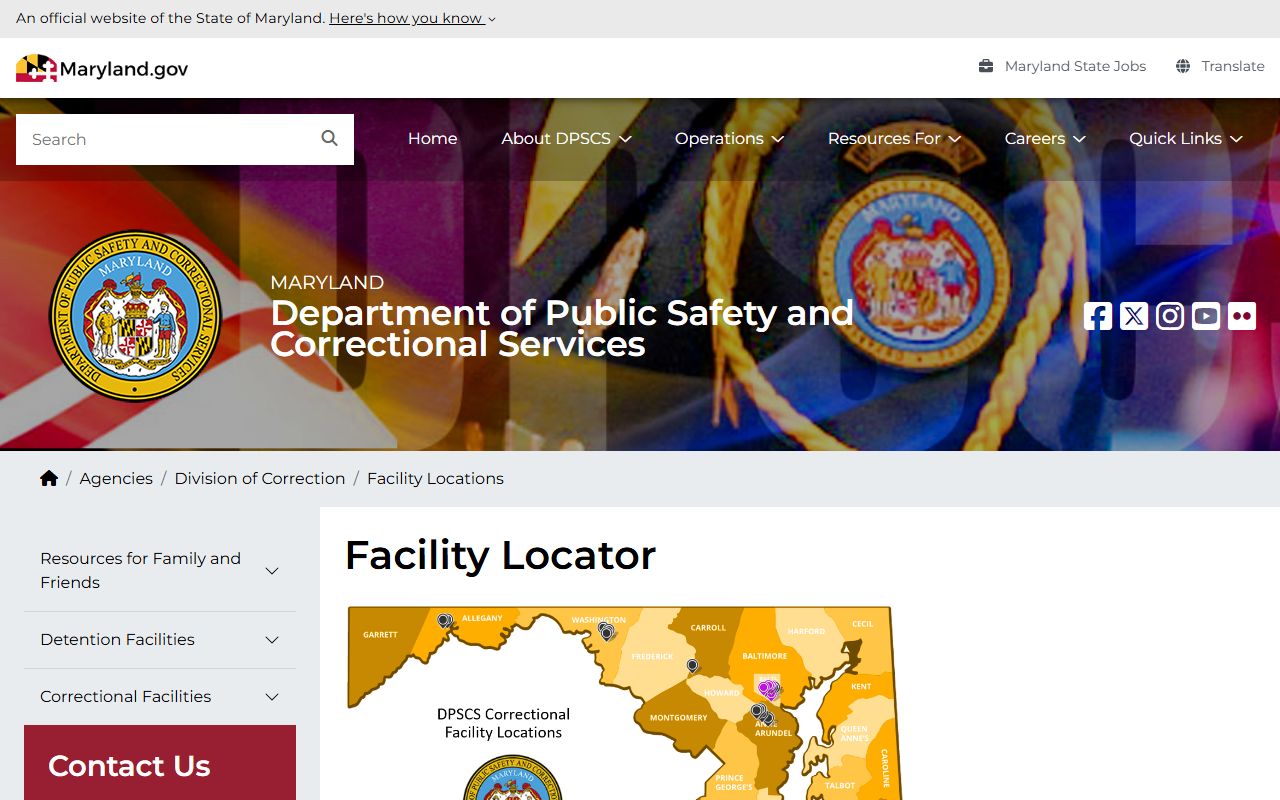
That source is why the statewide directory keeps Baltimore, Jessup, Hagerstown, Cumberland, and county detention entries separate instead of merging them into one prison label.
Laws Governing Maryland Inmate Records
Maryland's public-records law is the Maryland Public Information Act. General Provisions section 4-103 states the public policy favoring access to information about government affairs and official acts. Section 4-201 directs a custodian to allow inspection unless another law or an MPIA denial rule applies. Section 4-203 requires prompt action and generally not more than 30 days to grant or deny a request, with written delay notice if more than 10 working days are needed. Section 4-206 addresses reasonable fees and provides that the first two hours of search and preparation time are not charged.
Jail and prison records still have limits. Correctional Services section 3-602 restricts disclosure of state incarcerated-individual case records. General Provisions section 4-351 gives custodians discretion to deny some investigatory records. General Provisions section 4-301 covers mandatory denials for records made confidential by law, privilege, rule, or court order. Medical, juvenile, personnel, institutional security, and investigative records may be withheld or redacted even when a custody event is public.
Key Statutes:
General Provisions section 4-103 states Maryland's open-government policy.
General Provisions section 4-203 sets the general MPIA response timing.
Correctional Services section 3-602 limits disclosure of state correctional case records.
How to Search Maryland Inmates
Search order depends on why the person is in custody. A new arrest belongs with the county jail, VINE, and court case search. A sentenced state prisoner belongs with the DPSCS locator. A federal sentence belongs with BOP. Immigration custody belongs with ICE ODLS. A court case after an arrest belongs with Maryland Judiciary Case Search. The wrong source can look like a missing record even when the person is still in custody.
- Start with custody type. Recent arrest points to the county; state sentence points to DPSCS.
- Use the person's legal name and compare spellings, initials, hyphenated names, and compound surnames.
- Check the Maryland county directory when the arresting or holding county is known.
- Use the DPSCS inmate population page for state-prison locator scope and limits.
- Check BOP, ICE, VINE, and Case Search when county and DPSCS sources do not fit.
The DPSCS Incarcerated Individual Locator is the official Maryland state-custody name search.
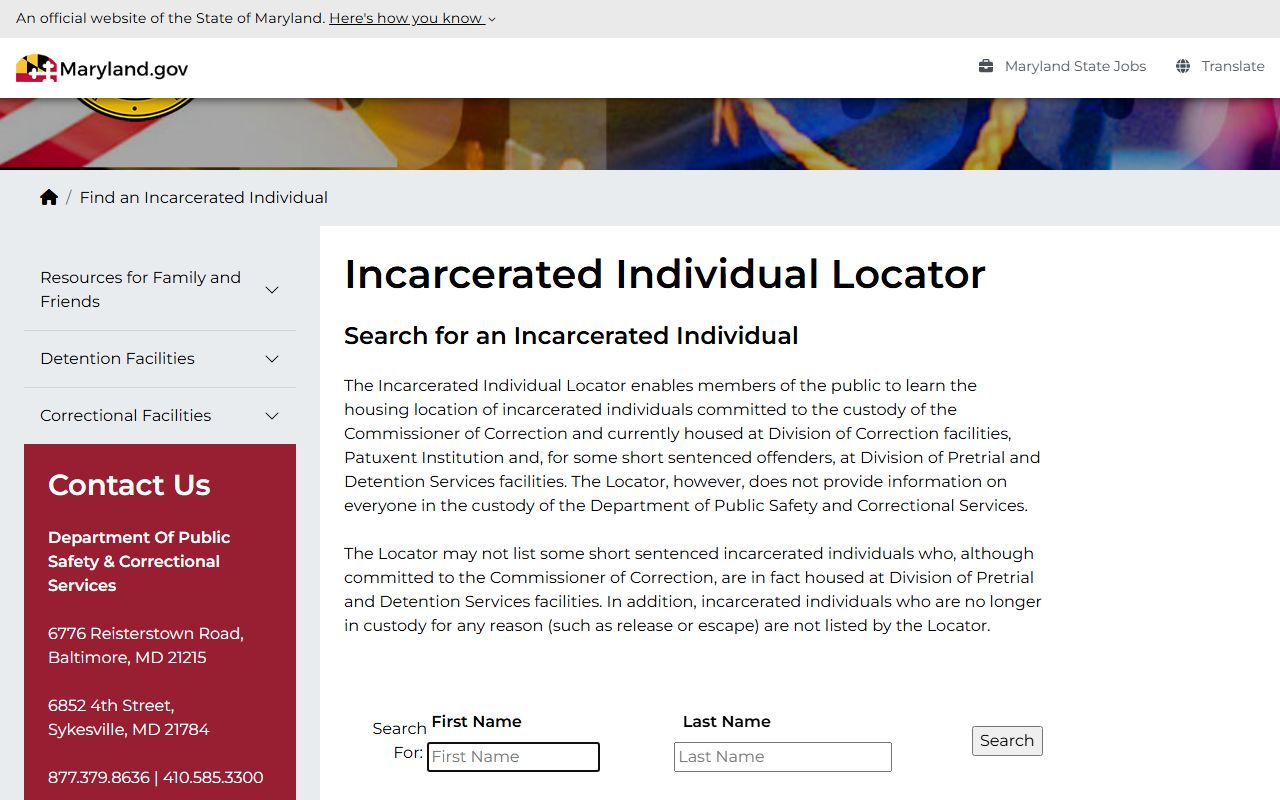
The locator belongs in the statewide search path, but its own scope limits mean county jail and court channels still matter.
County Jail or DPSCS
Maryland inmate population searches often fail because county jail and state prison are treated as the same thing. They are not. County jail records are local custody records. DPSCS records are state custody records. Baltimore City adds complexity because DPSCS operates major pretrial facilities there. A person may also be temporarily held for a court appearance, medical move, transport, federal detainer, or immigration issue.
| Question | County jail | DPSCS state custody |
|---|---|---|
| Who is usually held? | Recent arrests, pretrial detainees, short local sentences | Sentenced people committed to the Commissioner of Correction |
| Primary lookup | County roster, county records route, or VINE | DPSCS Incarcerated Individual Locator |
| Record limits | Varies by county and local roster policy | Does not list everyone in DPSCS custody or released people |
| Best next source | Maryland Judiciary Case Search for filed charges | DPSCS PIA process for DPSCS-held records |
State and Federal Inmate Search
Federal custody has its own locator. The Bureau of Prisons inmate locator covers federal prisoners and records from 1982 to present. FCI Cumberland is Maryland's BOP institution, but a Maryland resident may be in a federal facility outside Maryland. Immigration detention uses the ICE Online Detainee Locator System, which searches by A-number and country of birth or by biographical details. VINE provides custody and case notification where participating Maryland agencies and cases are integrated.
The Federal Bureau of Prisons inmate locator is the official federal custody search channel.
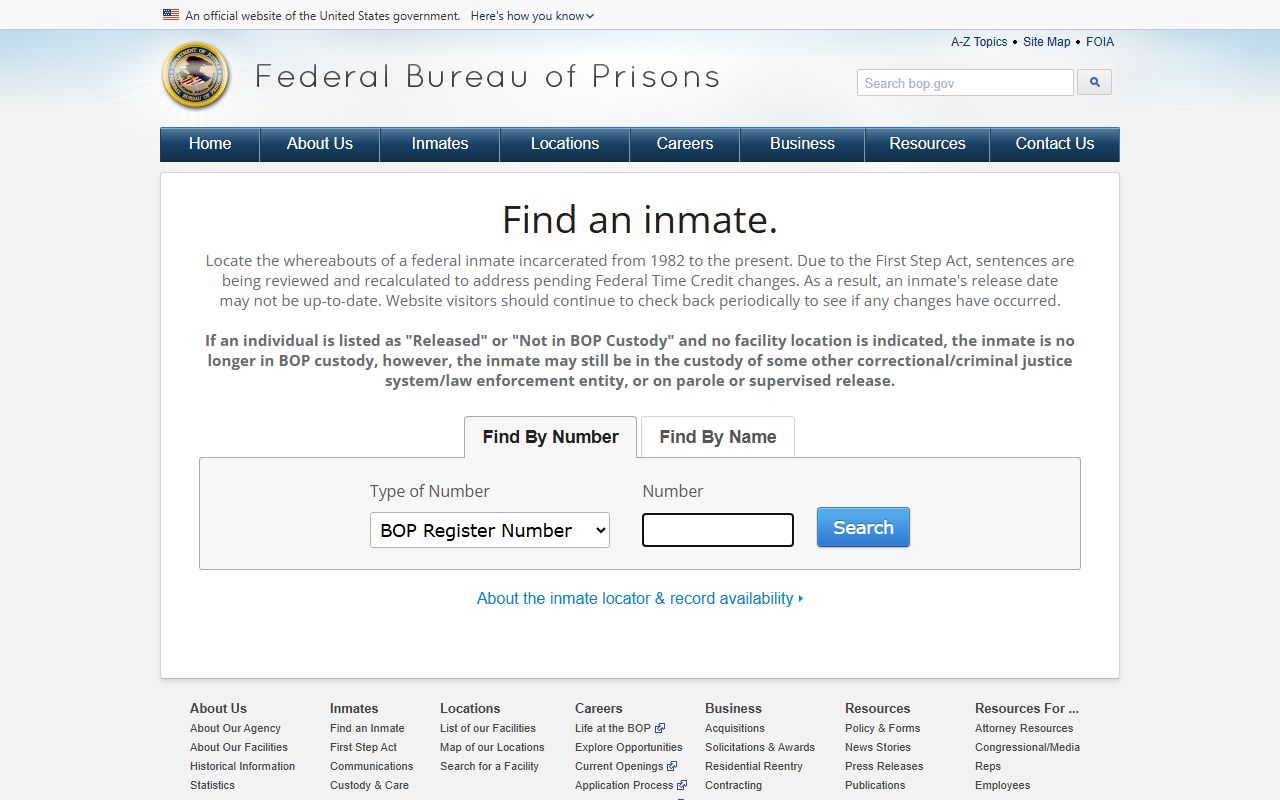
This federal locator is separate from the Maryland inmate population held by DPSCS or local jails, even when the person has a Maryland connection.
Maryland VINELink supports custody and court notifications where the relevant agency participates.
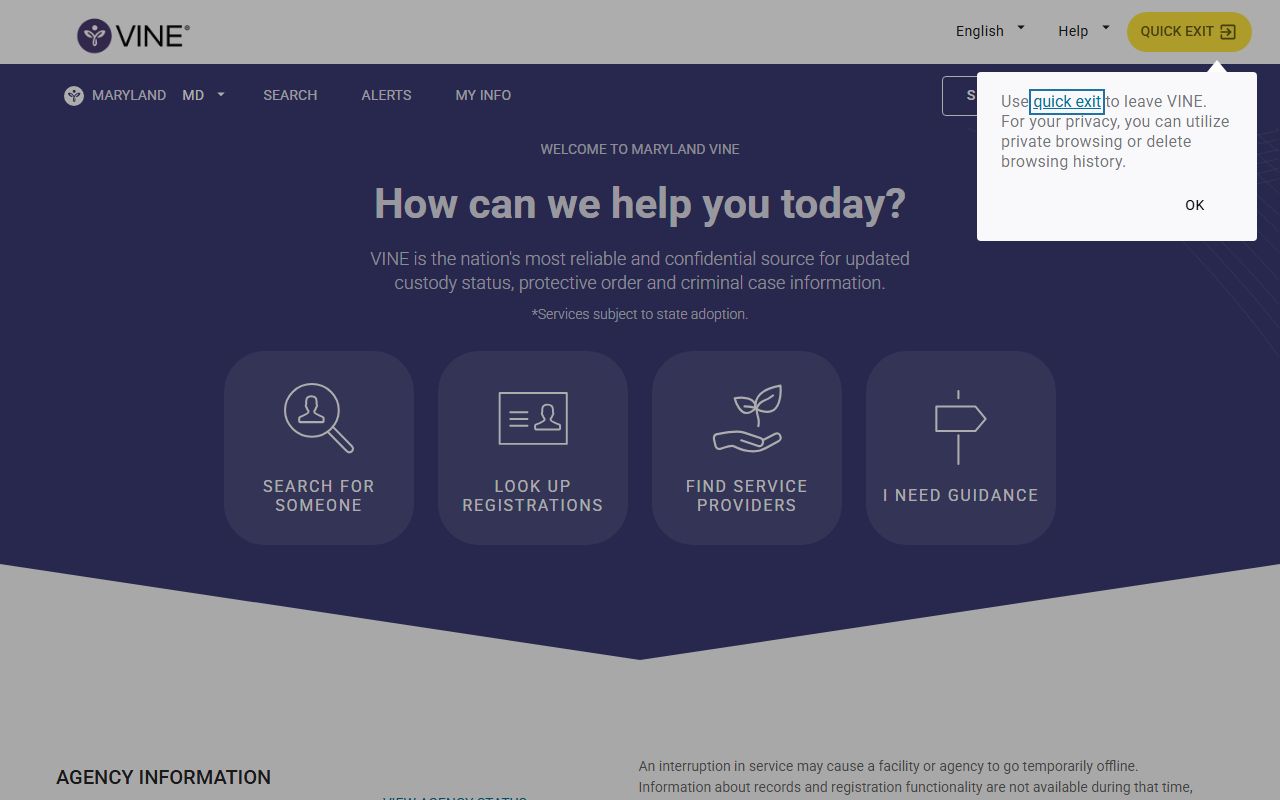
VINE is useful for notification, but Maryland victim-services guidance warns that it should not be the only safety-planning tool.
Maryland Court Records After Arrest
Custody records and court records answer different questions. A jail record can show that someone was booked, housed, released, or held on a bond condition. A court record can show the case number, charge, trial date, disposition, and public party details. Maryland Judiciary Case Search is the public statewide case-search channel, but complete files may require the clerk in the county where the case is pending. Some records are sealed, expunged, shielded, juvenile-restricted, or removed from online display.
Maryland Courts' court-records page explains Case Search and public access to court files.
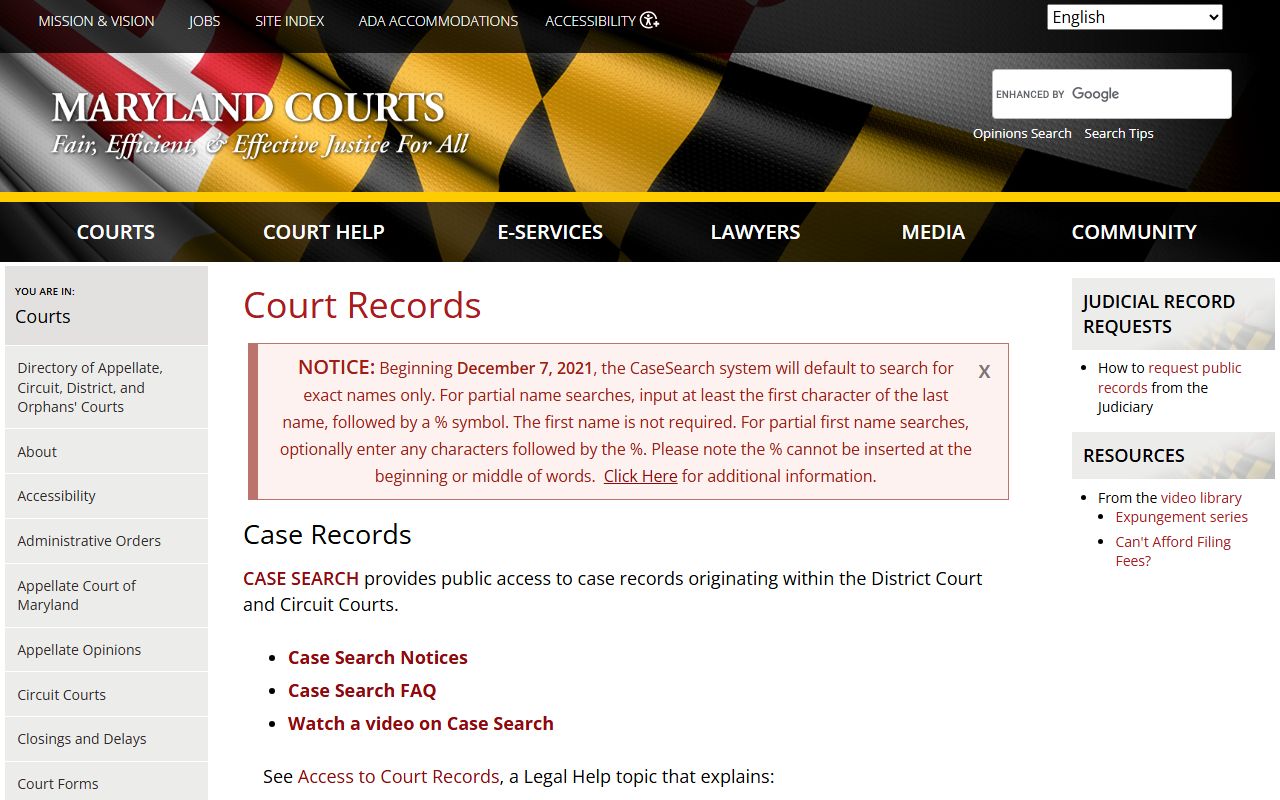
This court source should be paired with jail or DPSCS custody searches because filed charges can differ from booking information.
Maryland Detention Facilities
The statewide facility roll-up includes county detention centers, work-release and community corrections operations, state prisons, state detention facilities, secure juvenile facilities, and federal custody where the research identifies an actual Maryland facility. It does not add an ICE facility row without an official Maryland facility source. It includes three uncovered DPSCS gap rows from official state pages: Dorsey Run Correctional Facility, Maryland Correctional Institution - Jessup, and Maryland Correctional Institution - Women.
Maryland facility names require care because several clusters have similar labels. The Hagerstown area includes Maryland Correctional Institution - Hagerstown, Maryland Correctional Training Center, and Roxbury Correctional Institution, and each is a separate state prison. The Jessup area includes Jessup Correctional Institution, Maryland Correctional Institution - Jessup, Maryland Correctional Institution - Women, Dorsey Run Correctional Facility, and Patuxent Institution. Baltimore City includes Baltimore Central Booking and Intake Center, Chesapeake Detention Facility, Maryland Reception, Diagnostic and Classification Center, Metropolitan Transition Center, Youth Detention Center, and Baltimore City Correctional Center. The statewide directory keeps those records separate because a housing-location search fails when those names are collapsed into a generic place label.
The Maryland facility directory lists each facility alphabetically, marks covered and uncovered records, and keeps planned, juvenile, federal, county, and state entries in their proper categories.
Maryland Inmate Records Requests
DPSCS PIA requests go to DPSCS only when DPSCS holds the record. County jail records go to the county custodian. Court records go through Maryland Judiciary or the clerk. Police reports go to the police or sheriff's office that holds them. Prosecutor files go to the State's Attorney where available under law. A request sent to the wrong custodian can delay the search even when the record is public.
The research identifies a clear DPSCS address and email for state correctional records, but that does not make DPSCS the clearinghouse for all Maryland inmate population records. A booking photograph at a county jail, a local arrest report, a prosecutor file, and a court docket can all involve the same arrest while still being held by different custodians. DPSCS also explains that MPIA covers existing records, not requests to write or generate a new report or statewide list. For the public, the most reliable wording is simple: ask the agency that created or holds the record, and use the statewide directory only to find the right local or state path.
The DPSCS PIA page gives the state records request route, including the coordinator office, form, email, fee limits, and exemption examples.
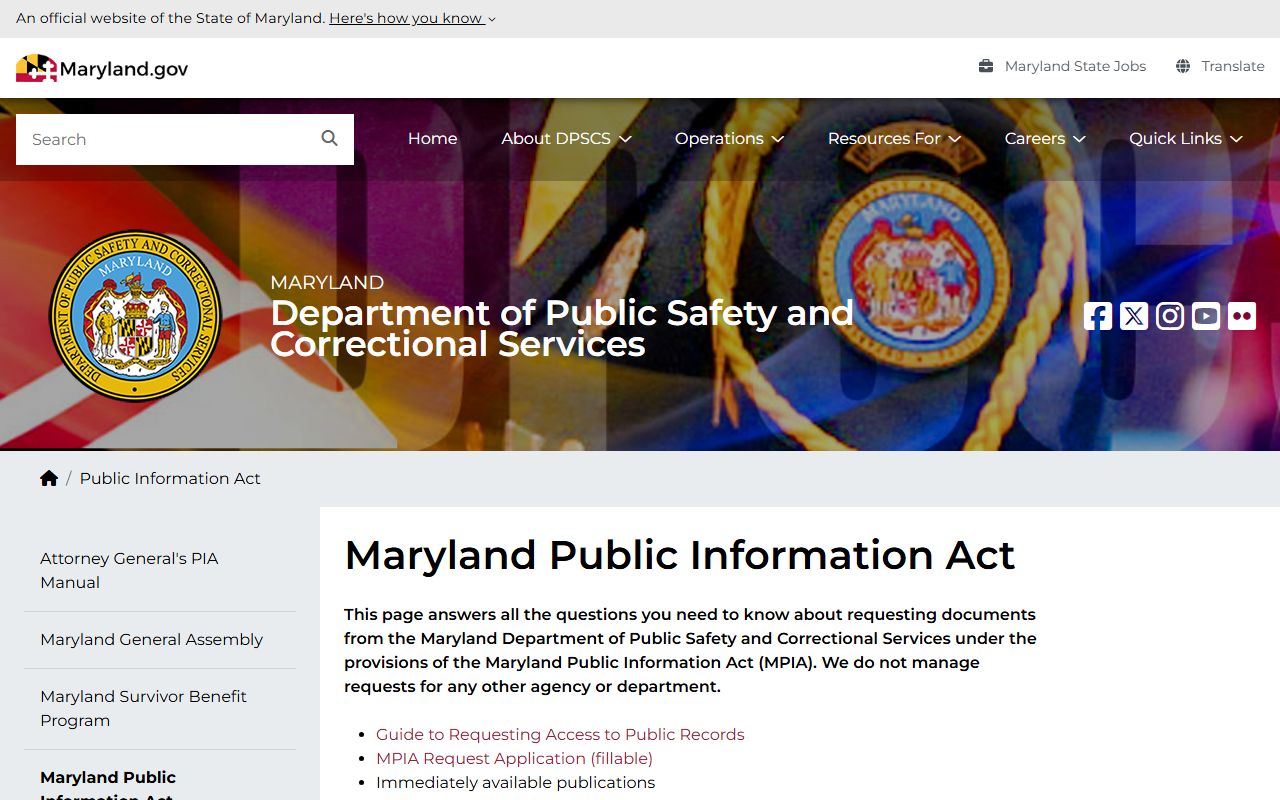
That records page is specific to DPSCS and should not be used as a substitute for county jail, police, prosecutor, or court records custodians.
Maryland Inmate Population FAQ
How big is the Maryland inmate population?
The research gives a sourced state-prison figure: DPSCS reported 15,686 average daily incarcerated individuals in FY 2025. County jail counts are not merged into one live public roster in the research. Use the state number as a dated DPSCS metric, not as a full live count of every county jail and prison bed in Maryland.
Does Maryland have one statewide jail roster?
No. Maryland has a statewide DPSCS locator for covered state custody, but county jail roster access varies by county. Some counties publish searchable rosters or booking feeds. Others route users to VINE, phone inquiry, public-records requests, or court records.
Where should a new arrest be searched first?
Start with the county that made or received the booking. If the arrest was in Baltimore City, check DPSCS, VINE, and Case Search because major pretrial detention there is state-operated. If the case is federal or immigration-related, use BOP or ICE ODLS.
Why does a court case appear when no jail result appears?
A court case can remain public after a person is released, transferred, or never booked into the facility a user first checks. Case Search is useful for charge and hearing details, but it is not proof of current custody. Pair it with the county jail route, DPSCS, VINE, BOP, or ICE as the custody type requires.
Public Record Search
Sponsored Results